
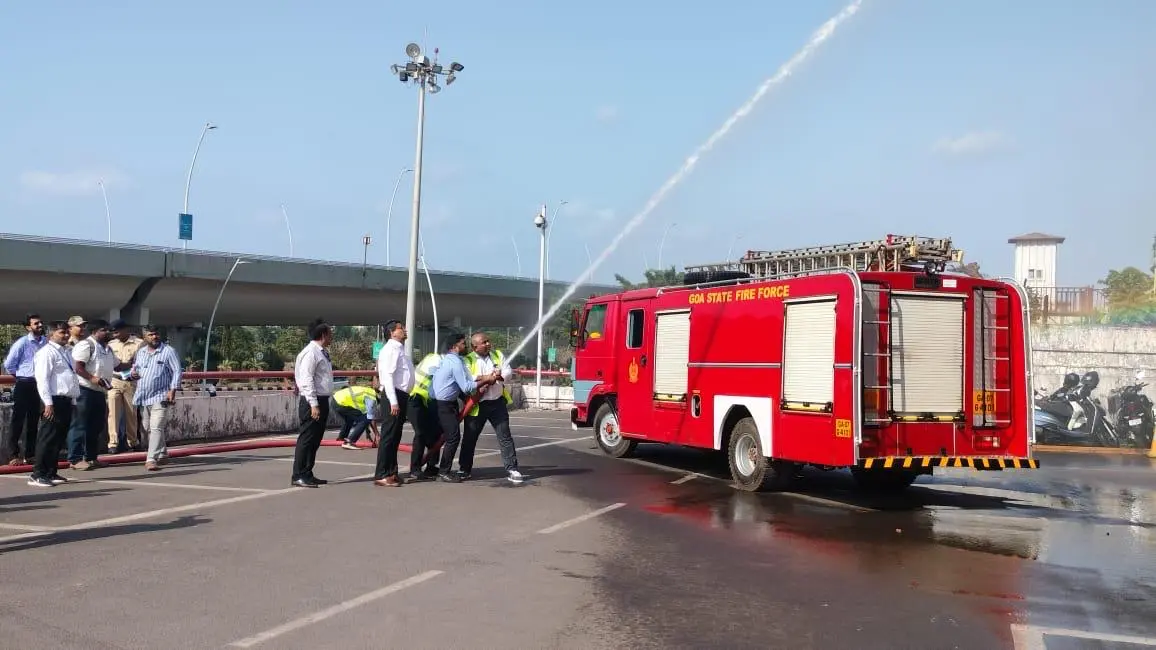
India’s civil-defence preparedness became visible on 7 May 2025, when sirens sounded across the country. Blackouts were rehearsed, evacuation routes tested and control rooms activated. Schools, hospitals, transport systems, police, fire services and Civil Defence volunteers took part in Operation Abhyaas , a nationwide exercise conducted on 7 May 2025 across all 244 designated Civil Defence districts.
For many Indians, this was their first direct encounter with civil defence. It was also a reminder that national security does not begin and end at the border. When a crisis reaches a city—a hostile strike, cyclone, earthquake, industrial accident, major fire or prolonged failure of critical infrastructure—the first question is brutally simple: can the state warn people, move them out of danger and keep essential services running?
India can answer that question with far greater confidence than it could 12 years ago. Since 2014, the country has expanded the National Disaster Response Force (NDRF), built a nationwide public-alert system, more than doubled key state disaster-response allocations, created dedicated mitigation funds, trained large numbers of community volunteers, strengthened earthquake and weather monitoring, invested in fire services and constructed hundreds of multipurpose cyclone shelters.
India now has a serious national backbone for managing large emergencies. But a national backbone is not the same as universal protection.
A warning that reaches a phone but is not understood is not enough. A shelter that exists on paper but is locked or badly maintained is not enough. A volunteer list that has not been updated, equipped or exercised is not enough. India is better prepared; it is not yet evenly prepared. That distinction matters.
Civil defence is not simply military defence
Military defence is concerned with deterring or defeating an adversary. Civil defence is concerned with keeping civilians alive, protecting property and preserving essential systems when danger arrives.
India’s legal foundation is older than many assume. The Civil Defence Act, 1968 provides the basic framework, while the Civil Defence Rules, 1968 cover evacuation, fire prevention, exercises, the protection of essential services and, when ordered, the construction and inspection of air-raid shelters. The law was later widened to connect civil defence with disaster management.
This wider definition is sensible. The same warning network, emergency operations centre, backup power system, trained volunteer or protected hospital can be valuable during war, a cyclone, an earthquake or an industrial emergency. The source of danger changes; many of the systems needed to protect people do not.
India therefore did not begin its modern preparedness drive from zero. The institutions created after the Disaster Management Act of 2005—including the National Disaster Management Authority, state and district authorities, NDRF and the National Institute of Disaster Management—were already in place by 2014. What changed over the following 12 years was their scale, reach and integration.
A national doctrine finally took shape
India entered 2014 with important organisations but without a single national disaster-management plan assigning responsibilities across hazards and across the full cycle of prevention, preparedness, response and recovery.
The first National Disaster Management Plan was issued in 2016 and revised in 2019 . In October 2024, the NDMA issued national guidelines for disaster-management exercises , bringing greater discipline to how drills should be designed, assessed and followed up.
The Disaster Management (Amendment) Act , which took effect in 2025, moved the framework further. It placed key crisis bodies on a statutory footing, provided for a national disaster database and allowed states to establish Urban Disaster Management Authorities for state capitals and municipal-corporation cities.
That last change is especially important. India’s risk is increasingly urban: dense construction, crowded transport networks, ageing utilities, high-rise buildings, industrial clusters and dependence on digital systems can turn a local breakdown into a wider emergency. Yet legislation is only the opening move. In February 2026, the Union government said that Karnataka alone had constituted an Urban Disaster Management Authority for the Bengaluru municipal area. Most states still had to convert the new provision into a working institution.
The 12-year shift
More money is available before disaster strikes
The clearest measure of change is disaster finance. An official Rajya Sabha reply shows that allocations to State Disaster Response Funds rose from ₹61,220 crore in 2015–20 to ₹1,28,122 crore in 2021–26—an increase of roughly 109 per cent.
Just as important, India created separate mitigation windows: ₹32,031 crore for State Disaster Mitigation Funds and ₹13,693 crore for the National Disaster Mitigation Fund during 2021–26 . The Sixteenth Finance Commission has recommended a still larger pool for the next five-year period.
The real shift is philosophical. India is moving away from a system dominated by compensation and relief after calamity towards one that can also finance risk reduction before it. Better drainage, stronger fire services, resilient communications, safer public buildings and maintained shelters rarely attract the public attention that dramatic rescue operations do. Yet they are what prevent an emergency from becoming a catastrophe.
Money, of course, is not readiness by itself. Procurement quality, maintenance, trained personnel and honest audits determine whether an allocation produces an operational capability.
The response force is larger—and closer to risk
NDRF began in 2006 with eight battalions. It now has 16 battalions and a presence at 69 locations , including regional centres and tactical pre-positioning sites. That geographic spread matters. In forecast emergencies, teams can move before impact rather than begin their journey after lives are already at risk.
Fire services have also received overdue national attention. On 4 July 2023, the Union government launched a ₹5,000-crore scheme to expand and modernise state fire services. By March 2025, proposals worth ₹3,373.12 crore from 20 states had been approved .
Editorial source note: one February 2026 Rajya Sabha reply dates the launch to 2022. The contemporaneous launch record and later official PIB records date it to 4 July 2023; this article follows that original and repeated official chronology.
But the personnel gap cannot be ignored. A parliamentary committee reported in March 2026 that NDRF had 14,837 personnel in position against an authorised strength of 18,581—a shortage of 3,744, or about 20 per cent. It also raised concerns about equipment, communications, infrastructure and capital funding.
The conclusion is straightforward: India has built a stronger and more widely distributed specialist force, but it has not yet filled the force it has sanctioned.
Warnings can now travel nationwide
Perhaps the most visible transformation has taken place in public warning. NDMA’s Common Alerting Protocol-based SACHET platform now operates across all 36 States and Union Territories. By April 2026, the government said it had sent more than 134 billion SMS alerts in over 19 Indian languages. Official PIB record, 29 April 2026 On 2 May 2026, India launched its nationwide Cell Broadcast System , integrated with SACHET to deliver near-real-time, geo-targeted alerts across mobile networks.
The scientific layer beneath those alerts has strengthened too. India’s National Seismological Network expanded from 80 observatories in 2014 to 168 by February 2025 . Mission Mausam , approved in 2024 with an outlay of ₹2,000 crore, is adding radars, observation systems, computing power and forecasting capacity.
These improvements give India something it did not possess at comparable scale in 2014: the beginnings of an integrated chain from detection to mass public warning.
The right measure is not how many messages were sent. It is how many people understood them and reached safety.
Technology solves only half the problem. People must know who sent the warning, whether it is genuine and what action to take. “Severe weather expected” is information; “move to higher ground by 4 p.m. using Route B” is an instruction. Alerts must also reach those without smartphones, reliable connectivity or literacy, and people with hearing, visual or mobility impairments. Sirens, radio, television, public-address systems and local institutions remain essential.
The first responder may be a neighbour
In the first minutes after a building collapse, flood or fire, a national rescue unit is unlikely to be standing outside. Families, neighbours, municipal staff, police, health workers, facility managers and trained volunteers will act first.
India has begun to strengthen this community layer. The Aapda Mitra programme has trained 100,000 volunteers across 350 disaster-prone districts in first aid, search and rescue and basic emergency response. The approved Yuva Aapda Mitra expansion aims to train another 2.37 lakh volunteers , though that remains a target rather than a completed result.
Civil Defence has a much larger nominal base. A Lok Sabha answer in February 2026 reported about 5.95 lakh active Civil Defence volunteers and another 83,000 registrations through the portal and mobile application. More than one lakh volunteers were deployed at the grassroots during the Covid-19 response , demonstrating their value beyond wartime emergencies.
Here too, the numbers need context. The longstanding national target for Civil Defence strength is 14.11 lakh. The reported active strength is only about 42 per cent of that figure. More importantly, registration does not establish whether a person is recently trained, equipped, available and assigned to a local team.
India needs live rosters, periodic retraining and exercises that reveal who actually reports for duty.
India has shown that protective infrastructure can work
The National Cyclone Risk Mitigation Project offers one of the strongest models for the next phase. It combined warning systems with multipurpose shelters, evacuation roads, bridges, embankments, training and local shelter-management committees.
A World Bank implementation report recorded 73 completed shelters under the then-current phase in June 2014. By February 2025, official state-wise figures listed 795 multipurpose cyclone shelters across the expanded programme. Odisha accounted for 316, Andhra Pradesh 219 and West Bengal 146, with others in Gujarat, Kerala, Goa and Karnataka.
Many of these buildings provide value in ordinary times as schools, training centres or community facilities. That dual use is crucial: public infrastructure is more likely to be maintained when it has a daily purpose.
But a cyclone shelter is not automatically a blast shelter, and a basement is not automatically safe. Protection must match the hazard. A flood-prone village may need a raised shelter and vertical evacuation. An industrial corridor may need contamination controls and shelter-in-place procedures. A dense city may need smoke control, fire compartmentation, protected utilities, backup power and rapid evacuation. Strategically important sites may require hardened spaces.
India should pursue universal access to an appropriate protective option—not promise a bunker for every citizen.
Drills have become larger; now they must become more honest
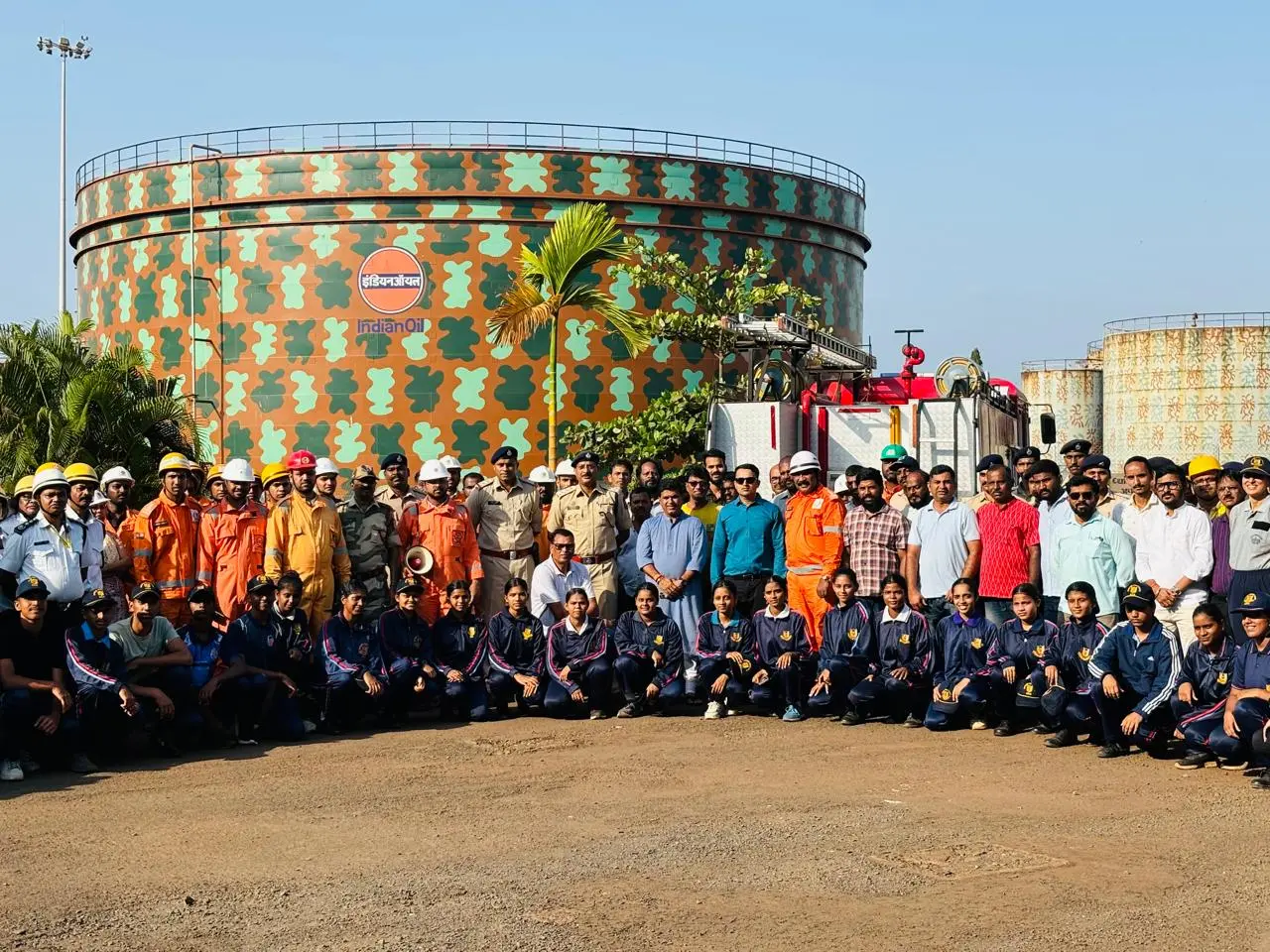
Operation Abhyaas showed that India can activate civil-defence machinery across the country. Later in 2025, Exercise Suraksha Chakra tested earthquake response at 55 locations across 18 districts in Delhi-NCR, including schools, hospitals, metro systems and residential complexes.
The value of such exercises is not the number of participants or photographs released afterwards. It lies in the uncomfortable details: which siren could not be heard, which hospital lost communication, which evacuation door was locked, which roster was outdated and how long it took to move people to safety.
Every major drill should produce a protected operational report and a public summary. Each serious failure should have an owner, deadline and retest. Otherwise, exercises risk becoming ceremonies that reward participation instead of discovering weakness.
So, is India ready?
India is materially more ready than it was in 2014. It can detect hazards more effectively, warn at national scale, pre-position specialist teams, mobilise more money, draw on trained community capacity and point to successful models of resilient infrastructure.
It would nevertheless be wrong to declare the country fully ready. Civil defence is experienced locally—in a home, school, hospital, metro station, industrial site or neighbourhood. Publicly available evidence still does not show a common national inventory of usable protective spaces, consistently measured warning comprehension, fully staffed response institutions or equally strong city-level continuity plans.
The next reform should make five practical changes.
- Map protective capacity. Every state and major city should maintain a secure, audited inventory of protective spaces, evacuation routes and essential emergency assets.
- Standardise public instructions. Create a small set of multilingual commands—evacuate, shelter indoors, move to higher ground, avoid an area—and test whether citizens understand them.
- Put cities in charge of execution. Rapidly establish and staff Urban Disaster Management Authorities, with named officials responsible for hospitals, schools, transport, utilities and public venues.
- Measure deployable manpower. Distinguish between people who are registered, trained, recently retrained, equipped and currently available. Fill NDRF vacancies and assign local teams real responsibilities.
- Treat maintenance as capability. A protective building without power, water, sanitation, ventilation and communications is not ready. Neither is a hospital without restoration priorities.
Search questions, answered
Key questions on India’s civil-defence preparedness
What does civil defence mean in India?
It means organised measures to protect civilians, property and essential services during hostile attacks and serious emergencies. In practice, it includes warning, evacuation, firefighting, rescue, first aid, public instruction and continuity planning.
How has India’s preparedness improved since 2014?
The clearest gains are a larger and more distributed NDRF, nationwide digital alerts, stronger hazard monitoring, higher disaster-response and mitigation allocations, community-volunteer training and more resilient cyclone infrastructure.
Is India fully prepared for the next civil-defence emergency?
Not yet. National capability is substantially stronger, but local staffing, protective-space inventories, public understanding of warnings and city-level continuity plans remain uneven. The next phase must turn national systems into dependable neighbourhood-level protection.
National resilience
Project SURAKSHA India
Strategic Underground Resilience and Knowledge-based Shelter & Homeland Architecture should not build a parallel bureaucracy. It should connect India’s existing laws and institutions to a measurable last-mile doctrine: every person should have timely access to the right warning, the right protective action and functioning essential services.
Explore Project SURAKSHA IndiaIndia has done the difficult work of building a national backbone. The next step is less dramatic, more exacting and ultimately more important: making sure it works wherever danger arrives.
Editorial verification
Evidence standard
Material quantitative claims were checked against India Code, parliamentary replies, Finance Commission documents, ministry releases, NDRF records or World Bank project reporting. Allocations do not establish expenditure quality; registrations do not establish deployability; and exercises do not themselves certify readiness. The article distinguishes official evidence from the author’s analytical judgment, discloses material source conflicts and assesses no classified capability.
Selected primary sources
- India Code — Civil Defence Act, 1968
- MHA — Civil Defence Rules, 1968
- NDMA — National Disaster Management Plan, 2016
- NDMA — revised National Disaster Management Plan, 2019
- NDMA — Guidelines on Disaster Management Exercises, October 2024
- MHA and PIB — Operation Abhyaas across 244 Civil Defence districts
- PIB — Operation Abhyaas photographs and South Goa record
- Rajya Sabha — 2025 amendment and Urban Disaster Management Authorities
- Rajya Sabha — response funds, mitigation funds and community programmes
- Sixteenth Finance Commission — disaster-risk financing
- NDRF — battalions and regular presence at 69 locations
- PIB — fire-services modernisation scheme launched on 4 July 2023
- PIB — fire-services proposals approved by March 2025
- Parliamentary committee — NDRF staffing and readiness
- NDMA — SACHET National Disaster Alert Portal
- PIB — SACHET alert volume and language coverage, 29 April 2026
- PIB — nationwide Cell Broadcast System launch on 2 May 2026
- PIB — expansion of India’s seismic network
- PIB — Mission Mausam
- NDMA — Aapda Mitra community-volunteer programme
- PIB — Yuva Aapda Mitra approval and training target
- Lok Sabha — active Civil Defence volunteer strength
- MHA annual report — Civil Defence deployment during Covid-19
- MHA annual report — Civil Defence target strength
- World Bank — cyclone-shelter progress in 2014
- Lok Sabha — state-wise cyclone-shelter totals
- PIB — Exercise Suraksha Chakra